Where to Eat, Sleep, Spa and Wander
Taipei is one of those cities that gets under your skin before you even realise it’s happening.
It doesn’t announce itself loudly. There’s no aggressive sensory overload, no relentless hustle demanding your attention. Instead, Taipei unfolds — block by block, bowl by bowl, soak by soak — revealing a city of extraordinary depth that somehow manages to feel both exhilarating and deeply, genuinely relaxing.
Think of it as the best of China and Japan, distilled into one compact, brilliant city. The culinary richness and ceremonial warmth of Chinese culture. The precision, cleanliness and quiet orderliness of Japan. The result is a destination that feels almost frictionless — where everything works, everything is clean, and everywhere you turn, someone is either cooking something extraordinary or taking very good care of their health.
For travellers who care about food, culture and wellness, Taipei isn’t just a good destination. It’s a revelation.

Getting Around — Effortlessly
Before anything else, let’s talk logistics — because Taipei makes getting around an absolute pleasure.
The MRT (Mass Rapid Transit) is a dream: clean, punctual, air-conditioned and almost insultingly easy to navigate even if you don’t speak a word of Mandarin. Signage is in English throughout, fares are affordable, and stations are so spotless you could eat off the platform floors (though the night markets will offer something considerably more interesting). The system connects virtually every corner of the city and — crucially — reaches all the way to Beitou, the famous hot spring district, in just twenty minutes.
But Taipei’s real gift to the slow traveller is how beautifully it rewards walking and cycling. The city is flat, orderly and logically laid out, with wide footpaths, dedicated cycling lanes, and a well-maintained public bike-share system called YouBike that makes two-wheeled exploration genuinely accessible. Neighbourhoods flow naturally into one another, and the streets — immaculate, tree-lined and often shaded — make wandering an actual pleasure rather than an exercise in survival.
It is, in short, a city designed for humans rather than cars. And that makes all the difference.
Where to Stay — Comfort, Convenience and Quiet Luxury
Our base for the visit was Illume Taipei, a well-positioned hotel in the Songshan District on Dunhua North Road. It strikes the right balance between comfort and practicality — thoughtfully designed rooms, generous breakfasts blending local and international options, and a location that puts you close to both business districts and cultural neighbourhoods without plunging you into tourist chaos.
For those wanting to push the indulgence dial further, the Mandarin Oriental Taipei is a short distance away and operates at a different altitude entirely. Grand interiors, impeccable service and one of the finest hotel spas in the city — it’s the kind of property that justifies staying in simply to experience it.

Where to Eat — A Culinary City That Takes Food Extremely Seriously
If Taipei has a religion, it is food. And the city practises it devoutly. Meals here are not fuelling stops. They are events — shared, savoured, debated and remembered.
-
Taipei 101 — Dinner Above the Clouds: One of the standout dining experiences of any Taipei visit is dinner at Taipei 101 — not just for the spectacular views over the city skyline, but for the quality of the culinary experience itself.
-
Hot Pot — This Is Not Optional: If there is one meal you must have in Taipei, it is hot pot. And it is not simply dinner — it is theatre. Gathered around steaming pots of deeply flavoured broth, you cook fresh ingredients at the table: razor-thin slices of wagyu, plump seafood, leafy vegetables and hand-rolled noodles.
-
Din Tai Fung — The Dumpling Pilgrimage: No visit to Taipei is complete without Din Tai Fung, the legendary dumpling house. The xiao long bao (soup dumplings) — paper-thin skin, piping hot broth, perfectly seasoned pork — are eaten with a ritual seriousness that feels entirely warranted.
-
The Night Markets — Rao He and Shilin: Taipei’s night markets are not tourist traps — they are institutions. Shilin is the largest and most famous, while Rao He Street Night Market is smaller and arguably more authentic, anchored by a famous Fuzhou pepper pork bun stall.
-
Yongkang Street — For Serious Food Wanderers: For daytime eating, Yongkang Street offers some of Taipei’s most rewarding culinary wandering — excellent beef noodle soup, independent tea houses, and mango shaved ice at Smoothie House.
Three Things You Must Try — Taiwan’s Culinary Icons
-
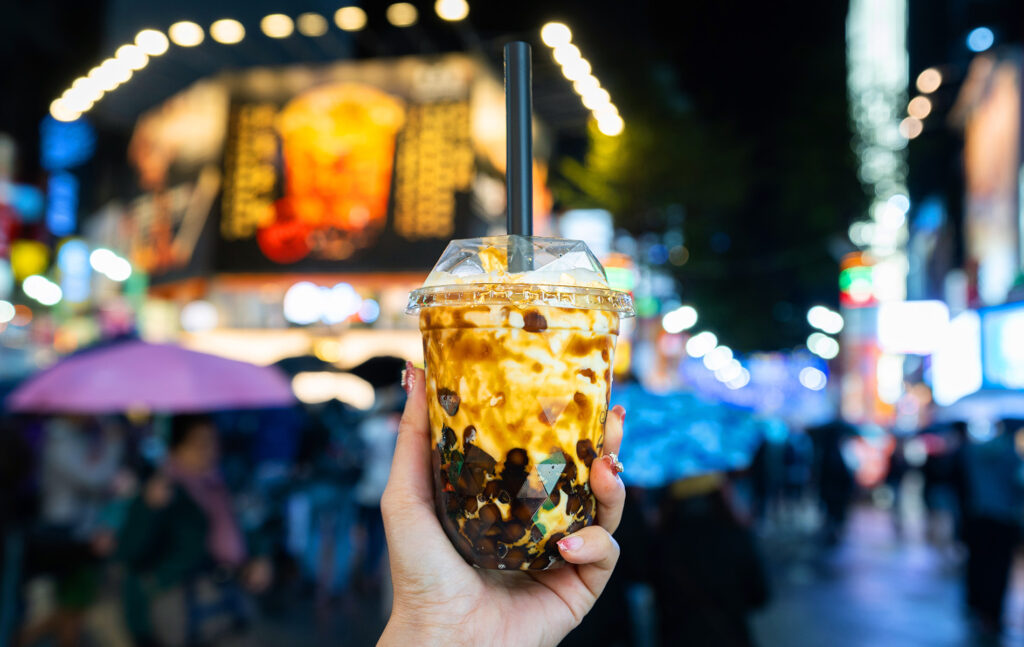
Bubble Tea: The Original, and Still the Best. Invented in Taiwan in the 1980s. At shops like Chun Shui Tang, 50 Lan or the beloved Tiger Sugar, the tea is properly brewed and the tapioca pearls have a chew that feels almost architectural.
-
Scallion Pancakes (Cong You Bing): Flaky, layered, deeply savoury and cooked fresh on a griddle — Taiwanese scallion pancakes are street food perfection.
-
Pineapple Cake — Taiwan’s Greatest Edible Export: A buttery, crumbly shortbread-style pastry shell filled with a sweet-sticky pineapple jam centre. Sunny Hills and Gloria Prince are two of the most celebrated producers.
Exploring the City — A Place Designed for Discovery
Taipei rewards wandering in a way that few cities do, largely because wandering here is so effortless. The streets are immaculate — genuinely, impressively, almost-unbelievably clean for a city of this size and density.
-
Dadaocheng: One of Taipei’s oldest districts, wearing its history visibly and beautifully with traditional red-brick buildings and century-old tea merchants.
-
Elephant Mountain (Xiangshan): Offers a short but rewarding hike with sweeping views over the Taipei skyline and Taipei 101.
-
Daan Forest Park: Taipei’s version of Central Park — a vast, well-maintained green space where locals run, stretch, play music and breathe.

Spa and Wellness — Where China Meets Japan
Taipei’s wellness culture is one of its most distinctive qualities. From Japan came the onsen culture: the reverence for hot spring water and the ritual of soaking. From China came the broader philosophy of preventative health: the herbs, the treatments, and the belief that the body is best served through daily care.
The real pilgrimage is to Beitou — just twenty minutes from central Taipei on the MRT — where natural geothermal hot springs have been used for bathing since the Japanese colonial era. What stays with you is the attitude toward bathing: not as occasional luxury, but as ordinary self-care. As necessary as sleep.
The Takeaway
Taipei doesn’t demand your admiration. It earns it — gradually, quietly, through a thousand small moments of excellence.
It is a city that balances energy and ease, tradition and innovation, the best of East Asia’s greatest cultures — without the chaos, the crowds or the noise you might expect.
Come for the food. Stay for the hot springs. Leave completely converted. And pack extra luggage space for pineapple cake. Trust us on this one.